Every travel website will tell you Ireland is beautiful year round, which is technically true and practically useless if you're trying to decide when to book flights.
The honest answer is that some times are genuinely better than others, and it depends on what you're looking for. Here's what nobody tells you.
September
If you can only go once and you want the best odds of a good experience, go in September.
The summer crowds have thinned. The major tourist spots that felt overrun in July are manageable again. Hotel availability opens up and prices drop.
There's a particular quality to September in Ireland that's hard to put into words but easy to feel. The colleges go back, the new school year begins, and the whole country seems to settle into something. It's almost a second spring. Summer is winding down, the farms are moving toward harvest, winter is somewhere on the horizon, but none of that has arrived yet. Everyone is starting the next chapter at the same time. There's an optimism to it, a collective sense of renewal, that makes September one of the most quietly uplifting times to be there.
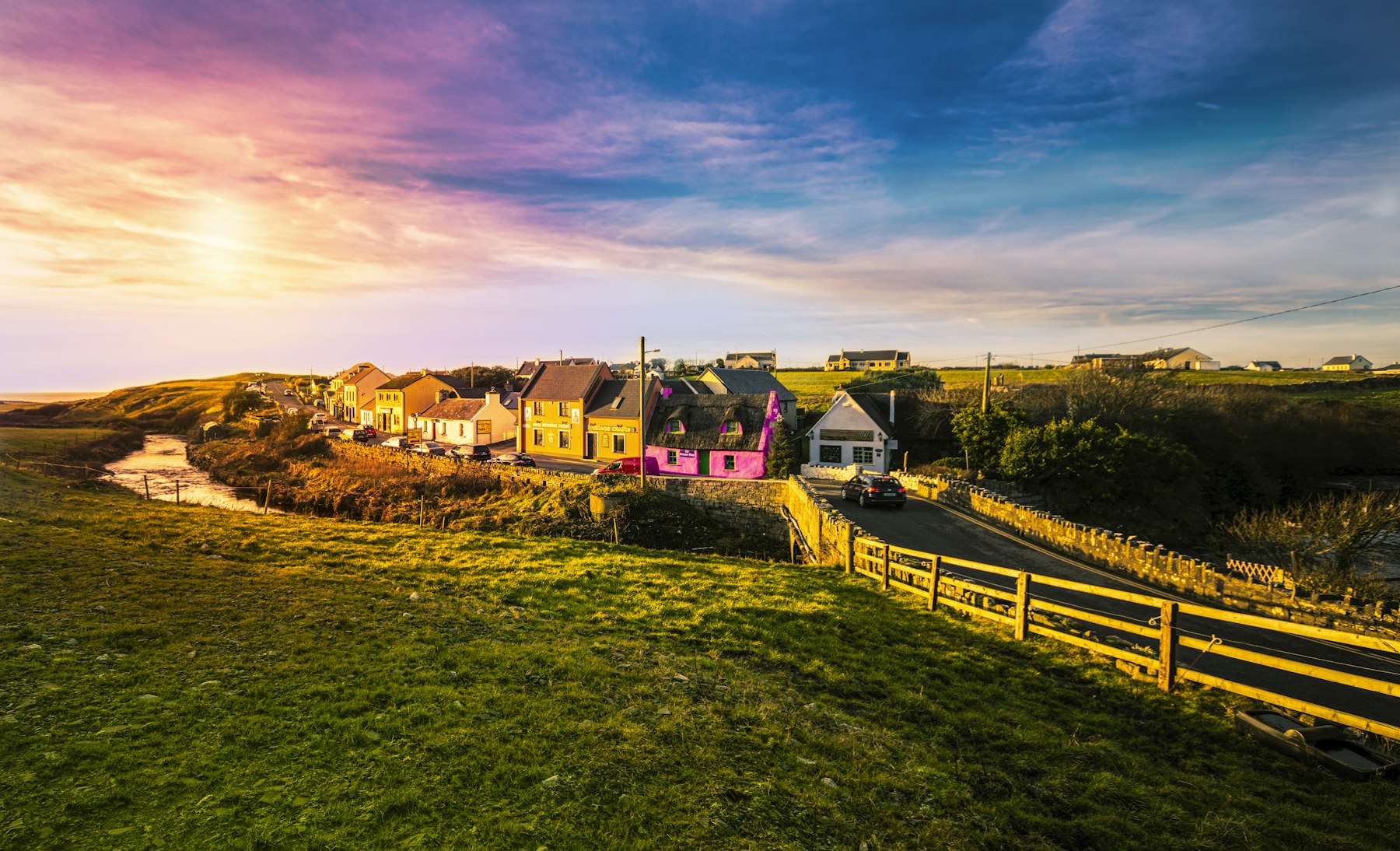
The light helps too. Long golden evenings, soft mornings, the kind of quality that makes everything look slightly more beautiful than it probably deserves. Photographers know this. Most tourists don't.
The countryside is at its best. Still green but with the beginning of autumn colour coming through, particularly in the west.
The weather has a reputation for being better than August. Whether that's actually true or just a collective feeling shared by everyone who lives there is hard to say. Either way the perception exists and in Ireland perception often becomes its own kind of reality. Go in September and you'll probably have good weather. You'll definitely believe you were lucky to miss August.
May and June
There's a phenomenon in Ireland known as exam weather. Every year, reliably, a period of genuinely beautiful sunny weather arrives in late May and June, precisely when hundreds of thousands of Irish students are sitting their Leaving Certificate exams, stuck inside while the country bakes outside. Nobody can explain why it happens. It just does. The students are furious about it every single year.
For visitors it means May and June can be a genuine surprise. The days are long, the evenings stretch out until ten o'clock, and the whole country undergoes a transformation that you have to see to fully understand.
Ireland in the rain is one thing. Ireland in the sun is something else entirely. The moment the weather turns, everyone emerges. The canal in Dublin gets lined with people sitting out with pints, office workers on lunch breaks, students who have finally finished their exams. The Forty Foot in Sandycove, an open air sea swimming spot just outside Dublin, fills up with swimmers of all ages. There's a particular kind of joy in the Irish sunshine that comes partly from the fact that nobody quite trusts it to last. Everyone is outside because nobody is sure how long it will hold.
It's one of those things that doesn't make it into any travel guide but stays with visitors longer than almost anything else they did.
July and August
July and August are when most Americans visit Ireland. The schools are out, the flights are booked months in advance, and the popular spots are at their busiest.
The weather is genuinely better on average than the rest of the year. But Ireland doesn't do guarantees and packing for four seasons remains the advice regardless of when you travel. A week in July can be glorious. It can also include a day or two that tests your waterproof jacket. Sometimes both in the same afternoon.
What peak season does come with is crowds. The Cliffs of Moher in August is a very different experience to the Cliffs of Moher in September. Dingle, Killarney, the Ring of Kerry. All of them are busy in a way that can work against the unhurried pace that makes Ireland worth visiting in the first place.
Prices reflect the season too. Accommodation costs more, availability at the better places is limited, and the castle hotels and restaurants that make a trip special need to be booked well in advance.
None of this means don't go in summer. Plenty of people have wonderful trips in July and August. Just go in with clear eyes. Book early, build in flexibility, and don't be surprised if the weather requires a change of plans. Ireland will still deliver. It just won't necessarily deliver on your schedule.
Christmas
Christmas in Ireland is not a sightseeing trip. The days are short, the weather is cold, and most attractions are not at their best in December.
But there is something that can't really be planned for or replicated. The pubs in December have a particular quality. Warm, busy, full of people who haven't seen each other in a while. The Irish diaspora comes home at Christmas in a way that changes the atmosphere completely. People who have spent the year in London, New York, Sydney, all back at the same time, all in the same local.
Christmas Eve in an Irish pub is one of those experiences that stays with you. It's not something you'd build a trip around. But if you're there, don't spend the evening in the hotel.
So when should you go?
There is no bad time to visit Ireland, but there are better times depending on what you want.
September for the best balance of weather, crowds, and light. May or June for long evenings and the country at its most alive. July or August if your dates are fixed, just book early and pack accordingly.
The one thing everyone agrees on is that the first visit is rarely the last. However the weather turns out, most people leave already thinking about when they can come back. That's not the worst problem to have.