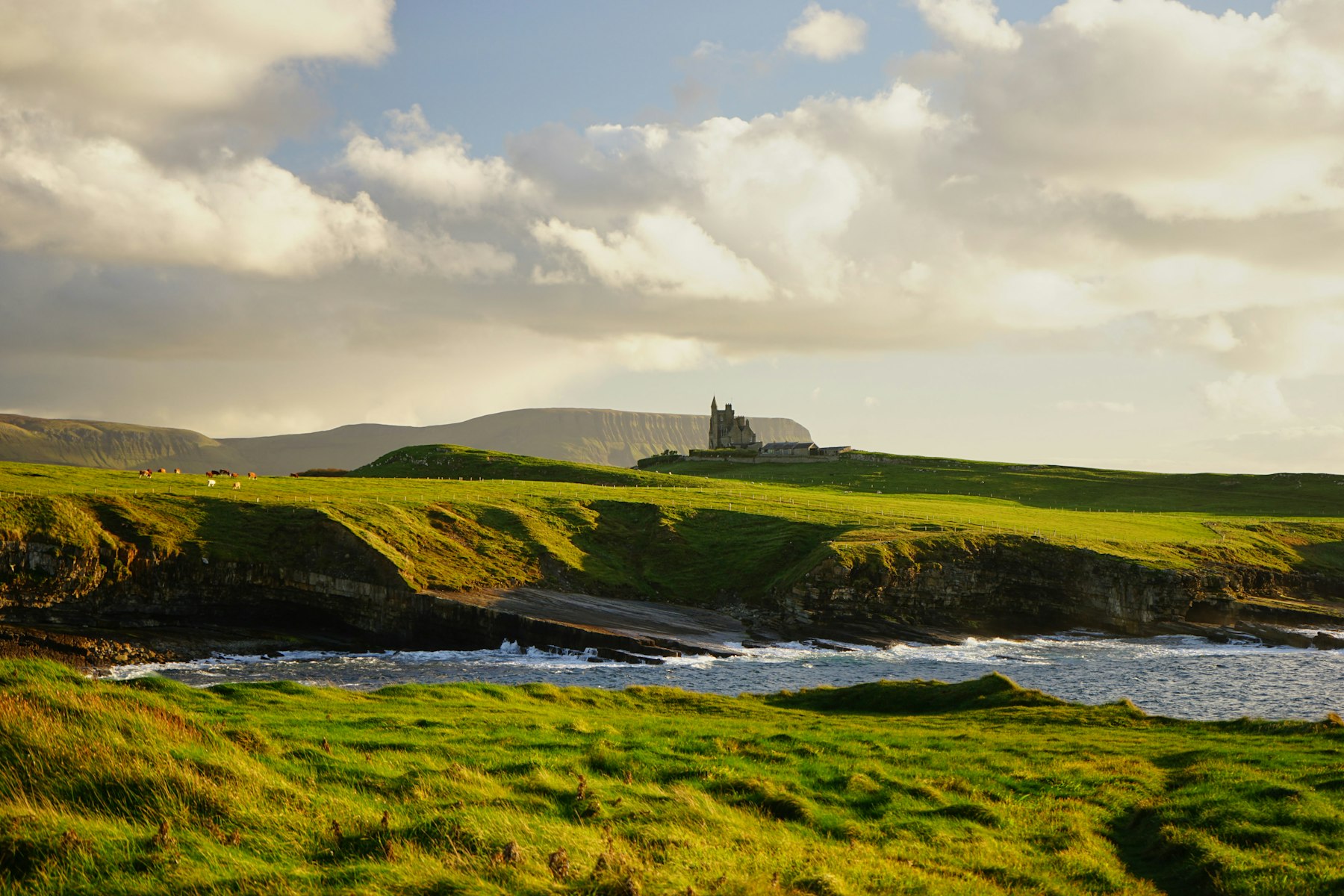
There's a version of Ireland that exists in the American imagination. Rolling green hills, pints of Guinness handed over a worn bar by someone who knows a song about your county. That version isn't entirely wrong. It's just missing a lot.
I grew up just outside Belfast, lived in Dublin for a decade, and have spent years watching visitors arrive with one Ireland in their heads and leave having experienced quite another. Always more complicated, more human, and more memorable than they expected.
Here's what I wish someone had told them before they left.
1. The roads will humble you
Americans arrive prepared for driving on the left. What they're not prepared for is driving on the left on a road the width of a garden path, with a stone wall on one side, a hedge on the other, and a tractor coming the other way at full confidence.
Irish roads are narrow. Not quaint narrow. Genuinely, properly narrow. The main routes are fine. Leave the main routes, which you should because that's where the good stuff is, and you'll need to make peace with reversing into passing places you didn't know existed five seconds ago.
When the tractor passes, you wave. Everyone waves. A full hand if you know them, a single finger lifted from the steering wheel if you don't. It sounds like a small thing. It isn't. It's one of those moments where you feel the difference between somewhere that still knows its neighbours and somewhere that doesn't.
One thing worth sorting before you pick up the car. Most rentals in Ireland are manual. If you've never driven a manual, or haven't in a while, book an automatic. It's worth the extra cost. If you're comfortable with a manual though, go for it. It's a more authentic experience and honestly more fun on those narrow roads. Just make sure you get the insurance. You'll thank yourself later.
2. Pack for four seasons, not one
People ask whether they need a raincoat for Ireland. The honest answer is that you need a raincoat, a light jumper, sunscreen, and possibly a scarf, and you might need all of them on the same day.
There's an old saying that there's no such thing as bad weather, only bad clothing. Whoever said it was almost certainly standing in Connemara at the time.
Irish weather is not bad weather. It's just unpredictable weather, which is a different thing. The light after a shower in the west of Ireland is unlike anything you'll see anywhere else. The way a sunny afternoon can turn dramatically overcast and then clear again inside an hour is something you either learn to love or spend the whole trip fighting. Learn to love it.
The practical advice is to layer. A good waterproof jacket that packs small is worth more than a heavy coat. Avoid packing only summer clothes even if you're going in July. July in Ireland can be genuinely warm and lovely. It can also be horizontal rain. Sometimes both before lunch.
September is worth a mention here. It's consistently underrated. The summer crowds have thinned, the weather is often more settled than August, and the light is extraordinary. If your dates are flexible, it's worth considering.
3. Tipping is appreciated, not expected
Americans tip. It's built in, almost reflexive, and the mental calculation happens before the bill even arrives. Ireland is different and it's worth knowing before you find yourself overtipping out of habit or undertipping out of confusion.
In restaurants, leaving something is appreciated. Ten percent is generous. Fifteen is very generous. There's no social contract that demands it the way there is in the States, and nobody will think less of you for not leaving anything if the service was ordinary. If it was great, say so and leave a few euro. That's enough.
In pubs you don't tip at the bar. There's no formal queue either. You find a space and wait your turn. The important thing is that the bartender knows who was there before you, and so do you. If someone has been waiting longer, point them out. It's good etiquette and people appreciate it.
And if you end up in a round, see it through. A round is a sacred thing in Ireland. Everyone takes their turn buying drinks for the group. Accepting three rounds and disappearing before yours comes up is not something anyone will forget in a hurry.
The broader point is that service in Ireland is generally warm because people are generally warm, not because they're working for tips. That distinction matters and you'll feel it.
4. The pace is different, and that's the whole point
Ireland is not a place that rewards rushing. The sooner you accept that, the better your trip will be.
Things take longer than you expect. The coffee comes when it comes. The conversation with the shopkeeper will run longer than you planned. The drive to the next town will take twice as long because you stopped to look at something and then stopped again because the view from the next hill was even better.
Americans are often used to optimising a trip. Fitting in as much as possible, moving efficiently from one thing to the next. That instinct will work against you in Ireland. The best moments tend to be unplanned. The pub you walked into because it was raining. The farmer who stopped to tell you about the field you were standing in. The twenty minute conversation that started because you asked for directions.
None of that happens if you're somewhere else in your head, already thinking about the next thing on the list.
Leave room in the itinerary. Not just time, but actual empty space. An afternoon with nothing booked. An evening with no plan beyond finding somewhere to eat. Ireland will fill that space in ways a spreadsheet never could.
5. North and South are two different places
Ireland can be confusing for first time visitors and it's worth getting this straight before you go.
The island of Ireland is one place geographically. Politically it's two. Ireland covers most of the island, is an independent country, a member of the European Union, and uses the euro. Northern Ireland covers the northeastern corner, is part of the United Kingdom, and uses the pound sterling. Belfast is in Northern Ireland. Dublin is in Ireland.
The border between them is invisible. You'll cross it without really noticing, which is one of the quiet achievements of the peace process. But you will notice the currency change, and the road signs switching from kilometres to miles.
Both are worth visiting and most trips benefit from including both. Belfast has been one of the great city transformations of the last thirty years and rewards proper time.
One gentle piece of advice. Language and identity mean a lot in both places, in ways that aren't always obvious to visitors. What you call a place, or which part of the island you're referring to, can carry more weight than you'd expect. You don't need to tread on eggshells. Just be curious, ask questions, and listen more than you talk. People will appreciate that more than you know.
6. The food has genuinely changed
There's an old joke about Irish food that visitors have been making for decades. Boiled potatoes, grey meat, not much else. It was never entirely fair and it's completely outdated now.
The foundation of good Irish cooking has always been the ingredients. The meat, the dairy, the produce. Ireland is a small, wet, green island and what that's good for, it turns out, is raising exceptional livestock and growing things slowly. The butter is extraordinary. The beef and lamb are some of the best in Europe. The seafood along the west coast, much of it landed that morning, is something visitors consistently underestimate until they're eating it.
The bread is worth a mention too. Soda bread, brown bread, batch loaves. Simple things made properly with good ingredients. People always ask where they can get it at home. They can't, really.
Some of the best food you'll eat won't be in any restaurant guide. It'll be in a pub in a small town that does a handful of things well and doesn't make a fuss about it. Keep an eye out. Those places are worth stopping for.
And then there's breakfast. A full Irish is still one of the great ways to start a day. Bacon, eggs, sausages, black and white pudding, toast, beans if you want them. Cross into Northern Ireland and it becomes an Ulster fry, which adds soda bread and potato bread to the plate and starts a conversation about which version is better that has never once been resolved. Both are excellent. The debate is part of the experience.
7. Book earlier than you think you need to
Ireland has become increasingly popular and in summer the best places fill up fast. The castle hotels and country houses that make a trip here special book up months ahead in peak season. If somewhere has caught your eye, don't assume you'll sort it later.
Golf is the same. The great links courses require serious advance planning in summer, some six months or more. If golf is a priority it needs to be the first thing you sort, not the last.
Outside the summer months things ease up considerably. September and October are particularly good, availability improves and you don't sacrifice much on the experience. If your dates are flexible, use that flexibility.
8. The craic is real, not a marketing slogan
Every visitor to Ireland hears about the craic before they go. It's on tea towels, it's in tourism brochures, it gets pronounced wrong by well-meaning Americans in Irish pubs in Boston. By the time you actually arrive you might be tired of the word.
Give it a chance anyway.
Craic, pronounced crack, is one of those words that resists a clean translation. It's the atmosphere in a pub when the conversation is going well. It's the energy in a session when the music takes hold. It's the feeling at the end of a night when something unplanned happened and everyone present knows it was special.
It's also worth knowing that craic is used across the whole island, north and south. One of those words that belongs to everyone regardless of where the border falls.
And the word does more work than you might expect. You can have great craic. A night out can be great craic. But you can also describe a person as great craic, which is one of the finer compliments you can pay someone in Ireland. It means they're good company, funny, present, the kind of person who makes a night better just by being there. If an Irish person tells you that you're great craic, you've done well.
You can't manufacture it and you can't go looking for it directly. What you can do is put yourself in the right places. A small pub with live music on a Tuesday night in a town you've never heard of will reliably produce more of it than a large tourist bar in the centre of Dublin on a Saturday.
Talk to people. Irish people are genuinely interested in where you're from, why you came, whether you have family here. That curiosity is real, not performed. Follow it and see where it goes. Some of the best conversations happen between strangers in Ireland and both parties know within minutes that something good is happening.
That's the craic. It's worth coming for on its own.
9. Everyone will ask if you have family here
It will happen within the first few conversations. A bartender, a guesthouse owner, someone you get talking to on a walk. Where are you from? And do you have family here?
In Ireland this isn't small talk. It's genuine curiosity and something deeper than that. The diaspora is enormous, the emigration history is long, and most Irish people have family somewhere else in the world. The question goes both ways and everyone knows it.
If you do have Irish roots, say so. Say where the family is from if you know, even roughly. Watch what happens. You'll get opinions, stories, directions to places you weren't planning to go, and possibly an invitation to something. Ireland is a small country and the connections are closer than you'd expect.
If you don't have Irish roots, that's fine too. You're still welcome and the curiosity is still genuine. But if you're reading this and you do have family here, even distantly, even a great grandparent who left a century ago, it's worth doing a little research before you go. Knowing the county, even the townland, opens doors in a way that's hard to explain until you've experienced it.
It's one of the things that makes Ireland unlike almost anywhere else you'll travel. The past is close to the surface and people carry it lightly, without heaviness, but it's there. Lean into it.
10. It will feel like home, even if you've never been
This is the thing that surprises people most and is hardest to explain before you go.
Americans with Irish roots often describe landing in Ireland for the first time as strangely familiar. Not because they've been there before but because the place has been with them in some form their whole lives. In the stories, the music, the names, the particular way humour works in their family that turns out to be just how people talk here.
Even visitors with no Irish connection at all tend to feel something. There's a scale to Ireland that's human rather than overwhelming. The landscape is dramatic but never cold. The people are warm without being performative about it. Things are taken seriously but not too seriously.
You'll leave wanting to come back. Nearly everyone does. The first trip answers some questions and opens others. The ancestry you half-traced, the county you didn't get to, the conversation in a pub that ended too soon.
Ireland has a way of making itself unfinished business. That's not a bad thing to be.